What is Optical Mark Reader (OMR) – Uses and Benefits Explained
Published: 16 Dec 2025
Checking hundreds of answer sheets by hand was slow and tiring. Mistakes often happened, and time was gone. Here, an Optical Mark Reader solved that problem. It is used where speed and accuracy matter. There are fewer errors, and teachers have less stress. Those improvements help schools and offices work better.
If you want to learn complete details about the input devices of computer, you can visit EC Science and read about each input device in detail.
What is Optical Mark Reader?
An Optical Mark Reader, or OMR, is a special machine used to read marks on paper. They are mostly used for exams, surveys, and forms. The machine scans the paper and captures the answers quickly. It helps save time and reduces mistakes compared to manual checking. OMR technology is easy to use and very accurate when the sheets are filled correctly.
History and Development of Optical Mark Reader
The history of Optical Mark Reader started many years ago. It was first used when schools and offices needed faster checking methods. At that time, checking papers by hand was slow. Many errors happened, and time was gone. Here, the idea of reading marks using machines was introduced.
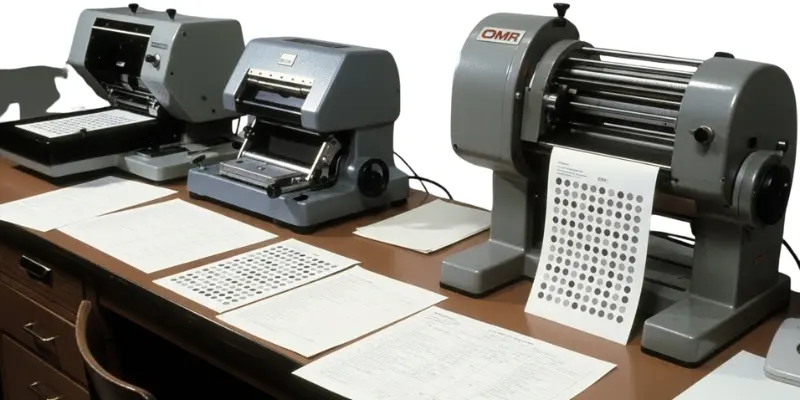
In the early stage, OMR machines were simple. They read dark marks made with pencils. There are systems where light sensors checked the paper. If a mark was dark, the machine recorded it. They are useful where large numbers of sheets needed checking. Those early machines were large and slow, but they helped reduce manual work.
Then, the development of Optical Mark Reader improved the process. New machines became faster and more accurate. Software was added to handle data better. It is now possible to check thousands of sheets in less time. There are tools where results are saved digitally. They are easier to use than older models.
Modern OMR systems have changed a lot. Online OMR tools have also arrived. Here, users fill forms on screens instead of paper. If sheets are used, scanners read them quickly. Those improvements have made OMR reliable for exams, surveys, and forms. The development has made data checking simple and efficient.
How an Optical Mark Reader Works
An Optical Mark Reader works in a clear and simple way. It is designed to read dark marks on special paper sheets. There are fixed places on the sheet where answers appear. They are marked using a pencil or pen. Here, the process starts when the sheet enters the machine.
The scanner shines light on the paper. It reads where dark marks appear. If a mark is clear, the machine records it as an answer. Those marks reflect less light, so detection becomes easy. It is how the system separates filled and empty spaces.
Then, the scanned data moves to the software. The software checks each mark against stored rules. There are answer keys already saved. They are used to match responses. If a mark was outside the allowed area, it may not count.
After checking, the system gives results quickly. Scores are calculated without delay. Here, manual checking is gone. There are fewer errors compared to human work. Those results can be saved, printed, or shared digitally.
If the sheet has extra marks or light shading, accuracy drops. That is why proper marking matters. It is important to follow guidelines while filling the sheet. Then, the Optical Mark Reader works smoothly and delivers reliable output.
Types of Optical Mark Reader
Optical Mark Reader systems come in different forms. It is important to know these types. There are different machines used for different needs. They are designed to read marked answers quickly. Here, each type works in its own way. The goal was always speed and accuracy.
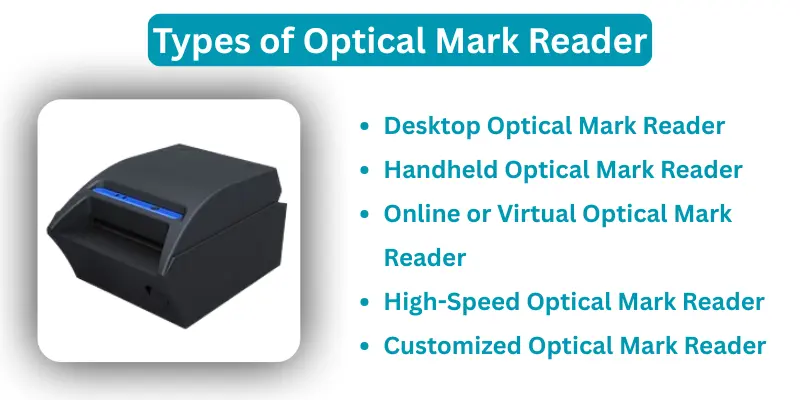
1. Desktop Optical Mark Reader
A desktop Optical Mark Reader is a fixed machine. It is placed on a table or desk. There are many schools where this type is used. They are suitable for exam checking. The machine scans many sheets one by one. Then, the system gives results in a short time.
2. Handheld Optical Mark Reader
A handheld Optical Mark Reader is small and portable. It is easy to carry. There are situations where quick checking is needed. They are used for small tests or surveys. The user scans the sheet by hand. Then, the device reads the marked areas.
3. Online or Virtual Optical Mark Reader
An online Optical Mark Reader works through software. It is used on computers or tablets. There are no physical sheets needed here. They are filled digitally. Then, the system checks answers automatically. This type has become common in online exams.
4. High-Speed Optical Mark Reader
A high-speed Optical Mark Reader is used for large tasks. It is found where thousands of sheets are checked daily. There are exam boards that use this type. They are very fast and accurate. Then, results are processed in bulk without delay.
5. Customized Optical Mark Reader
A customized Optical Mark Reader is built for special needs. It is designed where standard machines do not fit. There are organizations that need specific formats. They are adjusted to match those requirements. Then, the system works as planned.
Parts of Optical Mark Reader
The Optical Mark Reader has several important parts that work together. It is designed to read marked answers quickly. There are different components inside the machine. They are used where accuracy matters. Here, each part has a fixed role. If one part fails, results may change. Those parts help the system scan, detect, and process marks correctly.
- OMR Sheet
- Light Source
- Sensors
- Control Unit
- Card Path
- Mark Detection
- Data Interpretation
- Form Alignment
Uses of Optical Mark Reader
An Optical Mark Reader is used in many areas where fast and accurate data is needed. It is mostly seen in schools and colleges for exams. There are systems where thousands of answer sheets must be checked quickly. They are helpful when results are required on the same day.
Here are some main uses:
1. Education and Exams
It is widely used in multiple-choice tests. Teachers who have large classes can save time. There are exams where manual checking would take days. They are then scanned by OMR machines, giving instant results.
2. Surveys and Polls
Organizations often collect opinions from many people. Here, an OMR system makes it easy to process the data. They are used when survey forms have many questions. Those results can then be analyzed quickly.
3. Voting and Elections
OMR technology is also used in voting systems. It is designed to read marked ballots. There are elections where thousands of votes must be counted. They are scanned automatically, which reduces errors and saves time.
4. Corporate Training and Assessments
Companies who give tests to employees can use OMR. It is useful where many staff must be evaluated at once. They are helpful when performance results have to be ready quickly. Then, managers can give feedback efficiently.
5. Research and Data Collection
Researchers who collect data from forms find OMR useful. It is used where accuracy and speed are important. There are studies where manual counting would have gone wrong. They are then processed easily using OMR software.
Advantages and Disadvantages of Optical Mark Readers
Optical Mark Readers are used where fast and accurate checking is needed. It is helpful in exams, surveys, and forms. There are clear benefits, but some limits also exist. They are designed to reduce manual work. Here, advantages show how the system helps, and disadvantages show where care is needed. Those points help users decide proper use.
| Advantages of Optical Mark Readers |
|---|
|
| Disadvantages of Optical Mark Readers |
|---|
|
Conclusion
Optical Mark Readers are helpful tools used where speed and accuracy matter. It is used in exams, surveys, and other forms of data collection. There are many advantages, like saving time and reducing errors. They are reliable when sheets are filled correctly and the machine is handled properly. Here, understanding their parts, uses, and limits shall give users better results. Those who use OMR systems can work faster and smarter, making them important in education and other fields.
FAQs about Optical Mark Readers
It is a machine that reads marked answers on special sheets. They are used in exams, surveys, and forms to save time and reduce errors.
There are sensors and a light source inside. They detect marks on the sheet, and then software interprets the data to give results.
No, it is designed to read only shaded marks. Other types of writing cannot be detected.
They are used in schools, universities, surveys, elections, and corporate training.
They are fast, accurate, reduce human error, and handle large numbers of sheets efficiently.
If sheets are marked incorrectly or damaged, results may be wrong. They also cannot read handwriting.
Yes, some modern OMR systems work online or on computers and tablets, making them easier to use in exams or surveys.
There are guides to place sheets correctly. If alignment is wrong, sensors may read marks incorrectly, affecting results.
It has a scanner, light source, sensors, control unit, card path, mark detection system, data interpretation software, and form alignment guides.
It is very accurate when sheets are filled correctly and the machine is maintained well. Those results are faster and more reliable than manual checking.