What is a Mobile Phones
Published: 3 Feb 2026
Do you know how mobile phones work and why they are so popular? Many people think they are only for talking or messaging. But they are much more. Mobile phones can take photos, track health, give directions, and even help with school or office work. Here is a complete explanation about what is a mobile phones are for students.
What is a Mobile Phones
A mobile phone is a device that people use to communicate with others. It is small, easy to carry, and very useful. They are used for calling, messaging, taking pictures, and using the internet.
History of Mobile Phones
Mobile phones are now a part of daily life. They are small devices that help people talk, message, and connect to the internet. But there was a time when mobile phones did not exist. People had to think hard about how to communicate while moving. This need gave rise to mobile phones.
Who Created the First Mobile Phone?
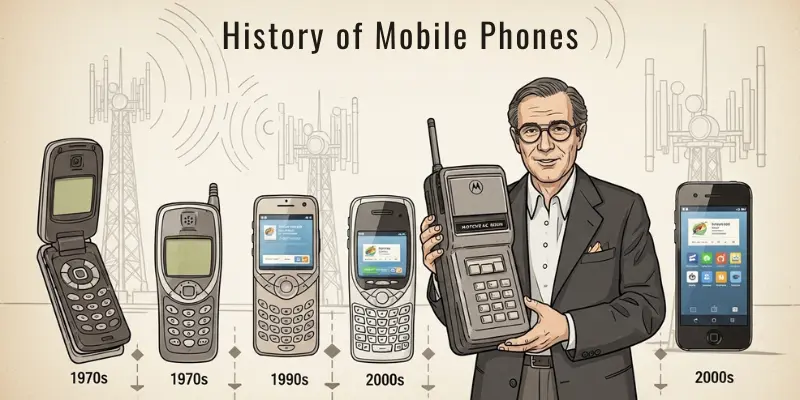
The first mobile phone was created by Martin Cooper, a scientist and engineer at Motorola, in 1973. He wanted to make a device that could call people without using wires. At that time, phones were only connected to homes and offices by cables. People needed a device that could move with them and allow communication anywhere. This idea of a portable phone came from the need to stay connected while traveling or working outside the home.
The First Mobile Phone
The first mobile phone that Martin Cooper developed was the Motorola DynaTAC 8000X. It was large and heavy, weighing around one kilogram. It could only make calls, and there was no internet, no camera, and no apps. The battery lasted about 30 minutes of talk time, and charging took many hours. This mobile phone was first sold in 1983, and it was very expensive. Even with its limitations, it was a huge step in mobile technology and marked the beginning of modern mobile communication.
Evolution After the First Mobile Phone
After the DynaTAC, mobile phones started to evolve. They became smaller, lighter, and easier to carry. During the 1980s and 1990s, feature phones became popular. These phones could call and text and sometimes had small screens and simple designs. People could now communicate more freely without being tied to a wired phone. Popular models of this time include the Nokia 1011 and Motorola MicroTAC.
In the early 2000s, mobile phones began to connect to the internet. People could send emails and browse simple websites on their phones. Some phones also started having basic cameras. Devices like the Nokia 6600 and Sony Ericsson models became popular because they offered more than just calling and texting.
The smartphone era began in 2007 when Apple launched the first iPhone. The iPhone introduced a touchscreen, internet access, apps, and a camera all in one device. After the iPhone, other companies like Samsung, HTC, and LG began producing smartphones. Smartphones became powerful mini-computers that fit in people’s pockets and allowed them to do many things beyond calling.
Modern Mobile Phones
Today, mobile phones are very advanced. They have high-quality cameras, fast internet, GPS, and thousands of apps for learning, shopping, entertainment, and work. Modern smartphones are smaller, lighter, and more powerful than ever. Popular examples include the latest iPhone, Samsung Galaxy, and OnePlus models. From the first heavy mobile phones to today’s sleek smartphones, mobile phones have completely transformed communication and daily life.
How Do Mobile Phones Work?
Inside a small device, many systems work at the same time. Signals travel, apps run, and screens react. All actions happen in seconds. How Do Mobile Phones Work? This process looks simple, but it follows clear steps. Below are the main steps that explain how mobile phones work in daily life.
- A mobile phone sends signals to the nearest mobile tower.
- The tower receives the signal and sends it through the network.
- The network finds the other person’s mobile phone.
- Voice changes into digital signals during a call.
- These signals travel very fast through the network.
- The other mobile phone receives the signal.
- The phone converts signals back into sound.
- Mobile data allows internet access through towers.
- Wi-Fi connects the phone to the internet using a router.
- The battery provides power to all phone functions.
Types of Mobile Phone
Mobile phones come in different types. Each type serves a different purpose. Some phones are simple, while some are advanced. People choose mobile phones based on their needs and usage. Below are the main types of mobile phones that are commonly used today.
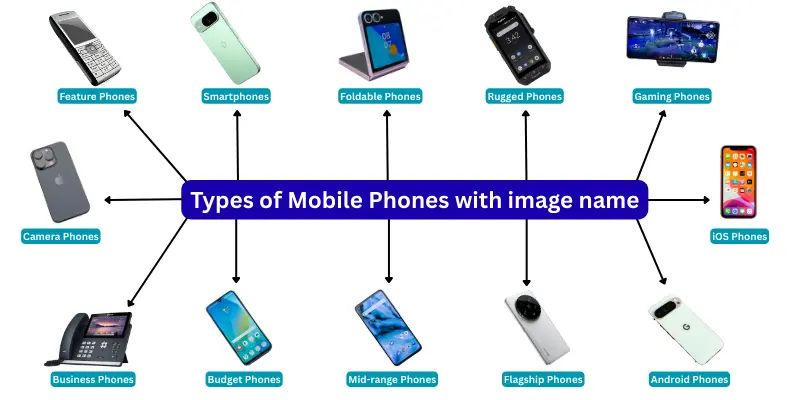
- Feature Phones
- Smartphones
- Foldable Phones
- Rugged Phones
- Gaming Phones
- Camera Phones
- Business Phones
- Budget Phones
- Mid-range Phones
- Flagship Phones
- Android Phones
- iOS Phones
Parts of Mobile Phones
A mobile phone has many parts that work together. Each part has a special job. These parts help the phone call, show pictures, play sound, and use apps. A phone cannot work well without them. Below, there are complete 20 parts of mobile phone for students.
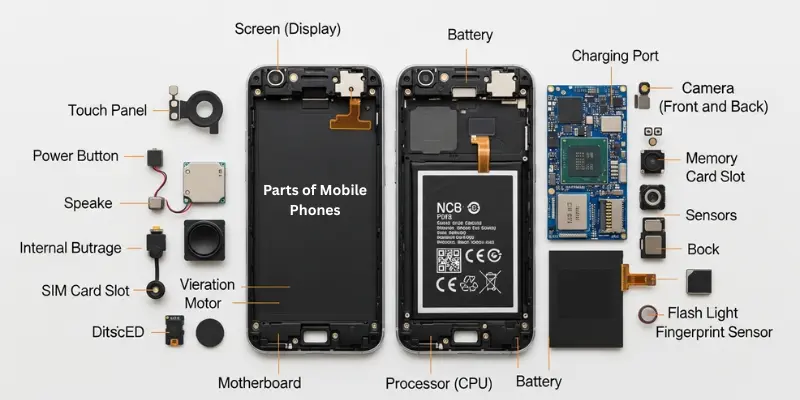
- Screen (Display)
- Touch Panel
- Power Button
- Volume Buttons
- Charging Port
- Speaker
- Microphone
- Camera (Front and Back)
- Battery
- Processor (CPU)
- Motherboard
- RAM
- Internal Storage
- SIM Card Slot
- Memory Card Slot
- Sensors
- Antenna
- Vibration Motor
- Flash Light
- Fingerprint Sensor
Characteristics of Mobile Phones
Mobile phones have many characteristics that make them useful. Each characteristic helps the phone work better in daily life. These features support communication, learning, and entertainment. Below are the complete characteristics of mobile phone for beginner students.
20 Characteristics of Mobile Phones here.
- Portable and easy to carry
- Wireless communication
- Fast calling and messaging
- Internet connectivity
- Touchscreen interface
- Supports voice and video calls
- Allows text and multimedia messages
- Runs mobile applications
- Stores data like photos and videos
- Provides notifications and alerts
- Simple to use
- Lightweight design
- Clear display and sound
- Quick response to touch
- Easy navigation
- Long battery support
- Camera for photos and videos
- Security features like lock and fingerprint
- Supports updates and apps
- Works with mobile networks
Uses of Mobile Phone
A mobile phone is used for many purposes in daily life. It helps people stay connected and complete tasks easily. Students, workers, and families use it every day. Below are the complete 20 uses of mobile phones for people.
- Making phone calls
- Sending text messages
- Video calling with others
- Sharing voice messages
- Attending online classes
- Searching study information
- Reading digital books
- Using learning apps
- Watching videos
- Listening to music
- Playing mobile games
- Using social media apps
- Sending emails
- Joining online meetings
- Managing work tasks
- Sharing documents
- Using maps for direction
- Online shopping
- Mobile banking and payments
- Setting alarms and reminders
Features of Mobile Phones
A mobile phone has many useful features. These features make the phone smart and helpful for daily use. People use these features for calling, learning, work, and fun. Below are the complete 20 features of mobile phones for people.
- Voice calling
- Text messaging
- Contact saving
- Alarm and clock
- Internet access
- Web browsing
- Email support
- Online apps usage
- Camera for photos
- Video recording
- Music player
- Video player
- Touchscreen display
- Mobile applications
- GPS location service
- Voice assistant
- Screen lock
- Password protection
- Fingerprint sensor
- Face unlock
Advantages and Disadvantages of Mobile Phones
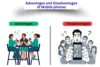
Mobile phones have many advantages and disadvantages. They help people stay connected, learn, work, and enjoy entertainment. But they can also cause problems if used too much. Below are the complete pros and cons of mobile phones for students.
| 10 Advantages of Mobile Phones |
|---|
|
| 10 Disadvantages of Mobile Phones |
|---|
|
Conclusion
A mobile phone is a small but powerful device. It helps people call, message, learn, work, and have fun. It has many parts and features that work together. Mobile phones are very useful in daily life. They make communication easy and fast. However, they should be used responsibly. If used properly, mobile phones can make life easier and more connected.
FAQs about What is a Mobile Phones
Many people ask questions about mobile phones. Here are complete FAQs about mobile phones in detail for students.
Mobile phones come in many brands. Some brands are very popular worldwide.
- Apple
- Samsung
- Huawei
- Xiaomi
- OnePlus
- Oppo
- Motorola
- Sony
- Realme
- Infinix
- Vivo
Some companies make the most mobile phones in the world. These are called top manufacturers.
- Samsung
- Apple
- Huawei
- Xiaomi
- Oppo
- Vivo
- Lenovo
- LG
- TCL
A cellphone is the old name for a basic phone. Mobile phones today have smart features like internet, apps, and cameras. Both can call and text, but mobile phones can do much more than a traditional cellphone.
Developing apps for mobile phones comes with security challenges. Developers need to protect users’ personal data from hackers. They must secure passwords, messages, and sensitive information. Apps should also be safe during updates. If security is weak, users can face data theft or privacy problems.
Foldable screens change the way apps are designed. Apps must adjust to both small and large screens. They should work well when the phone is folded or unfolded. This ensures that users can use apps comfortably in any mode.
Mobile phones are used for many daily tasks.
- Calling and texting
- Internet browsing
- Watching videos
- Learning online
- Mobile banking
5G technology makes mobile phones faster and more powerful. It gives quicker internet speed, smooth video calls, and faster app downloads. Online games and streaming videos work without delays. With 5G, users can enjoy better performance and more reliable connections.
Mobile phones make life easier in many ways.
- Easy communication
- Internet access
- Entertainment and games
- Learning support
- Navigation and maps
Mobile phones can cause problems if not used properly.
- Can distract studies/work
- Overuse affects health
- Expensive to buy/maintain
- Privacy risks
- May cause accidents