What is a Projector?
Published: 8 Feb 2026
Imagine watching a movie on a big screen at home. That’s what a projector can do! A projector is a device that shows images or videos on a wall or screen. It gives a big screen experience without needing a large TV. Let’s learn more about what is a projector and how it can be used in many ways.
What is a Projector?
A projector is a device that displays images or videos onto a screen or surface, using light. It is commonly used for watching movies, giving presentations, or displaying slides in classrooms. For example, in a movie theater, a projector shows the film on a big screen for everyone to watch.
History of Projector
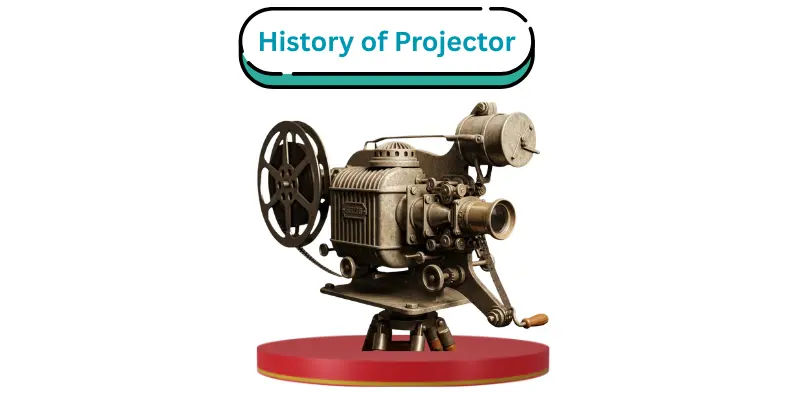
The history of the projector dates back to the late 19th century when inventors started to experiment with new ways to display images and moving pictures. The invention of the projector was driven by the need to show images or films to larger audiences. Over time, the technology evolved, improving in brightness, size, and quality. The first projectors were quite simple, and as technology advanced, they became more efficient and versatile, leading to the wide range of projectors we use today.
Early Inventions and the Beginnings of Projectors
The first projector like device was created in 1895 by the French inventor Auguste and Louis Lumière, who developed the Cinématographe. This device could both capture and project films, marking the birth of cinema projection. The Cinématographe was small, portable, and used a hand-crank to project the images onto a screen.
The Need for Larger Displays
As the demand for large-scale viewing of images and films grew, projectors became a key tool in theaters and educational settings. By the early 1900s, film projection became the standard way of showing movies to large audiences, replacing earlier methods like painted slides.
Advancements in Projector Technology
In the 1930s, Kodak introduced the Kodak 16mm projector, making home viewing of films more accessible to the public. These smaller, more affordable projectors were a significant step in projector development, allowing people to enjoy films at home.
The Rise of Digital Projectors
In the late 20th century, digital projectors emerged. The first digital projectors used DLP (Digital Light Processing) technology, developed by Texas Instruments in the 1980s. These projectors improved brightness, clarity, and color accuracy. By the 2000s, digital projectors had replaced the older film-based projectors in most cinemas.
Modern Projectors and Continued Evolution
Today, projectors continue to evolve with the introduction of LED and laser projectors. These projectors offer brighter images, longer lifespan, and more energy efficiency. The rise of portable projectors has made it easier to carry projectors for presentations or home entertainment, making them more accessible to a wider audience.
How Does a Projector Work?
A projector works by taking images or videos and displaying them on a larger surface, such as a screen or wall. It uses light to project these images, and the technology behind it involves several key steps. Here’s how a projector works:
- Light Source: The projector has a light source (usually a lamp or LED) that produces the light needed to create the image.
- Image Processing: The projector receives data from a connected device (like a laptop or DVD player) and processes the image or video.
- Digital Imaging Panel: The processed image is displayed on a digital panel, such as DLP, LCD, or LCoS.
- Projection Lens: The lens focuses the light and image to project it onto a screen or wall.
- Screen Display: The light travels through the lens and is projected onto a flat surface, creating a large image for viewers to see.
Parts of a Projector
A projector is made up of several important parts that work together to project images or videos. Below are the 10 parts of projector:
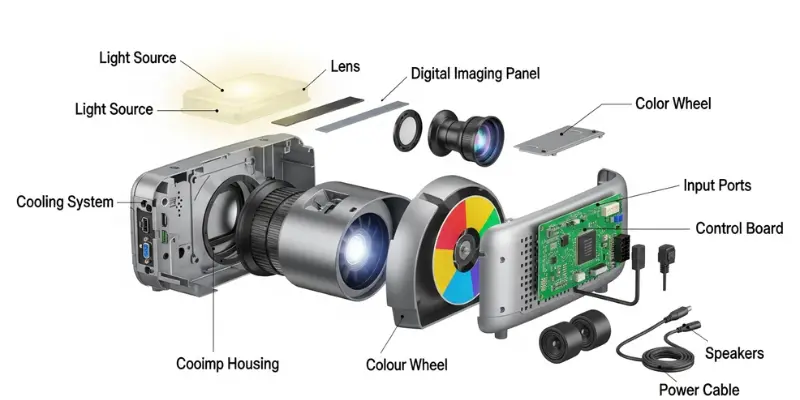
Here are 10 Parts of a Projector:
- Light Source: The bulb or LED that provides the light needed to project images.
- Digital Imaging Panel: The panel that displays the image or video (such as DLP, LCD, or LCoS).
- Lens: The lens focuses the light and image to make it appear larger on the screen.
- Color Wheel: Found in some projectors, it spins to create color from the light source.
- Lamp Housing: The case that holds the light bulb and protects it from damage.
- Cooling System: Fans or other systems that cool down the projector to prevent overheating.
- Input Ports: The connectors that allow you to plug in devices like laptops, DVD players, or gaming consoles.
- Control Board: The circuit board that controls the projector’s functions, like power and settings.
- Speakers: Some projectors include built-in speakers for audio output.
- Power Cable: Supply electricity and turn the projector on.
Types of Projector
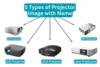
A projector is an output device of a computer. There are many different types of projectors available in the world, and each type has a specific use. Below are the main types of projectors explained in simple terms for students.
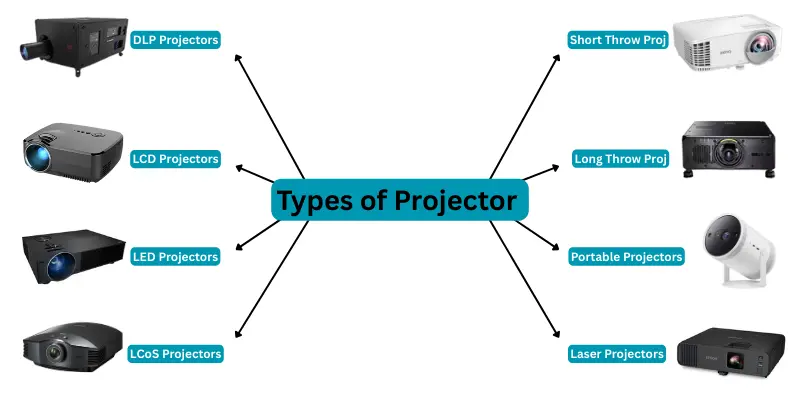
Here are 8 Types of Projector:
- DLP Projectors
- LCD Projectors
- LED Projectors
- LCoS Projectors
- Short Throw Projectors
- Long Throw Projectors
- Portable Projectors
- Laser Projectors
Features of a Projector
Projectors have many features that make them useful for different purposes. Below are the main features of a projector:
- Brightness (Lumens): Determines how bright the image will be. Higher lumens are better for bright rooms.
- Resolution: Shows how clear and sharp the image is, such as 720p, 1080p, or 4K.
- Portability: Some projectors are small and light, making them easy to carry.
- Connectivity Options: Includes HDMI, USB, Bluetooth, or Wi-Fi to connect devices easily.
- Projection Distance: Short-throw or long-throw options depending on the space size.
- Lamp Life: How long the projector bulb lasts before it needs replacement.
- Built-in Speakers: Some projectors come with speakers for audio output.
- Keystone Correction: Helps adjust the image to make it straight on the screen.
- Zoom Function: Lets users make the image larger or smaller without moving the projector.
- Color Accuracy: Ensures that the projected image has clear and natural colors.
Models of a Projector
There are many models of projectors, and each model has its own features. The price also varies depending on the model. Below are some of the popular projector models for students.
Here are 10 Models of Projector:
- Home Theater Projector
- Business Projector
- Classroom Projector
- Portable Projector
- Gaming Projector
- Outdoor Projector
- 4K Projector
- Short Throw Projector
- Long Throw Projector
- Laser Projector
Uses of a Projector
Projectors are very useful devices that can show images or videos on a big screen. They are not only for movies but can be used in many other ways for learning, work, and fun. Here are the main 10 uses of a projector:
Here are 10 uses of projector:
- Watch movies and shows on a big screen.
- Display slides and reports in meetings.
- Show lessons, videos, and educational content.
- Project films in backyards or parks.
- Play video games on a large screen.
- Show visuals, slideshows, or live feeds.
- Project images for tracing or digital art.
- Display promotions or product demos.
- Help employees or students learn visually.
- Share live meetings or presentations with a group.
Advantages and Disadvantages of a Projector
Before buying a projector, it is very important to know about it, as it helps to understand its pros and cons of projector. Below are the advantages and disadvantages of a projector.
| 10 Advantages of Projector |
|---|
|
| 10 Disadvantages of Projector |
|---|
|
Conclusion
A projector is a useful device that can show images and videos on a big screen. It is helpful for home entertainment, classrooms, offices, and events. There are many types of projectors, each with different features and uses. Learn how projectors work, their parts, advantages, and disadvantages, anyone can choose the right projector for their needs. Projectors make viewing larger, clearer, and more enjoyable.
FAQs about What is Projectors
Many people have questions about what a projector is, its types, features, parts, uses, advantages, and disadvantages. Here are detailed FAQs about projectors explained for students.
Here are 5 types of a projector:
- DLP Projector
- LCD Projector
- LED Projector
- LCoS Projector
- Portable Projector
Here are 5 Parts of a projector:
- Light Source (Lamp or LED)
- Digital Imaging Panel (DLP, LCD, LCoS)
- Lens
- Cooling System
- Input Ports (HDMI, USB, etc.)
Here are 5 uses of a projector:
- Home Theater for movies and shows
- Business Presentations
- Classroom Teaching
- Gaming
- Outdoor Movies or Events
Here are 5 features of a projector:
- Brightness (Lumens)
- Resolution (HD, 1080p, 4K)
- Portability
- Connectivity Options (HDMI, USB, Wi-Fi)
- Built-in Speakers
Here are 5 advantages of a projector:
- Large screen viewing
- Portable and easy to move
- Helps in better learning
- Cost-effective compared to a big TV
- Interactive lessons and presentations
Here are 5 disadvantages of a projector:
- Needs a dark room for clear images
- Bulbs may need replacement
- Built-in speakers may be weak
- Requires a flat screen or wall
- Setup takes time