What is Barcode Reader – How It Works & Uses in Daily Life
Published: 15 Dec 2025
Barcode Reader is an input device. Barcode reader is manually entering product details, which can be slow and often lead to errors. A barcode reader solves this problem by scanning barcodes and instantly showing the correct information. It helps stores, offices, and warehouses work faster without typing long numbers again and again.
If you want to learn complete details about the input devices of a computer, you can visit EC Science and read about each input device in detail.
What is Barcode Reader?
A barcode reader is a small device that scans barcode information and then shows it on a screen. There are many places where it is used, such as shops and warehouses, because they are helpful when fast and accurate work is needed. The scanner has a light and a sensor that reads the barcode, and then the data is changed into text. If the barcode is clear, correct details are shown in seconds, and manual typing is almost gone, making work easier for those who use it.
History of Barcode Reader
The history of the barcode reader begins when stores needed a faster way to record product information. Long ago, workers wrote prices by hand, and it was slow and full of mistakes. Here, the idea of using lines and machines to read data was born.
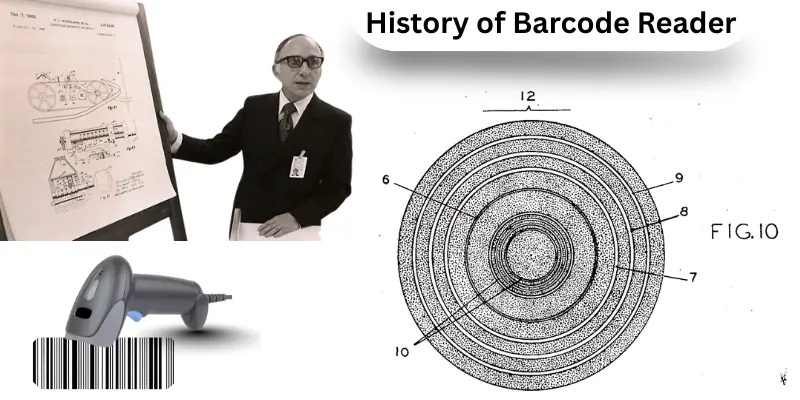
Early Idea of Barcodes
The first barcode idea was created in the 1940s. Who created it has one simple goal: to make billing faster. At that time, the barcode was a circular pattern, and it was not like modern barcodes. Those early designs were hard to read, and machines have limited power.
First Working Barcode System
In the 1970s, barcodes were improved, and then real barcode readers appeared. When stores started using them, checkout time became shorter. There are many stories where grocery stores have seen faster work and fewer errors. It is the time when barcode readers have gone from labs to real shops.
Barcode Reader in Daily Life
After success in stores, barcodes were used in other places. They are now found in hospitals, libraries, warehouses, and schools. If tracking items was hard before, barcode readers give a better solution. How they work became simpler, and where they are used also increased.
Modern Barcode Readers
Today, barcode readers have become small and smart. There are wired and wireless models, and they are easy to use. Mobile phones have also become barcode scanners. Here, technology shall continue to improve, and barcodes have become part of daily life for him, her, and everyone else.
Types of Barcode Reader
There are different types of barcode readers, and they are used in many places based on need, usage, and working style. Each type has its own job, and it is chosen based on where, when, and how barcode scanning is needed. Here are 5 types of barcode readers included.
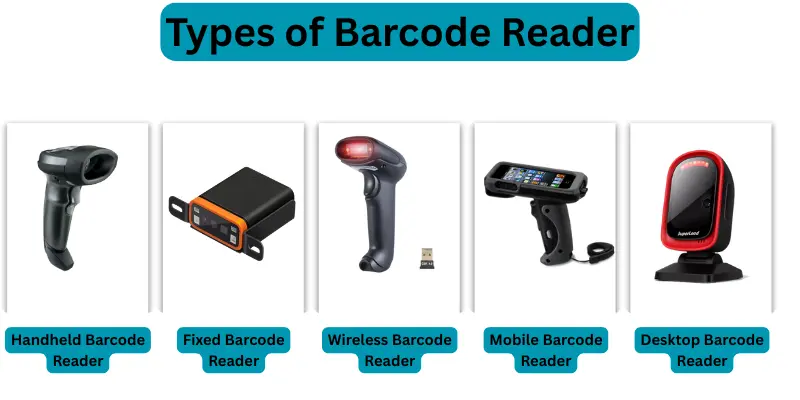
1. Handheld Barcode Reader
It is the most common type of barcode reader used in shops and stores. They are held in the hand, then pointed at the barcode to scan it. Here, the user presses a button, and the barcode data is read quickly.
| Advantages of Handheld Barcode Reader |
|---|
|
This type is used where speed matters and when items are scanned one by one.
2. Fixed Barcode Reader
There are fixed barcode readers installed at one place, such as checkout counters. They are not moved, and items are brought in front of them, then scanned automatically.
| Advantages of Fixed Barcode Reader |
|---|
|
Here, scanning is faster, and the worker does not need to hold the device.
3. Wireless Barcode Reader
They are barcode readers that work without cables. It is connected using Bluetooth or wireless signals.
Here, the user can move freely, which helps in large spaces.
| Advantages of Wireless Barcode Reader |
|---|
|
This type has become popular because it gives comfort and flexibility.
4. Mobile Barcode Reader
It is a barcode reader that works on mobile phones or tablets. There are apps that scan barcodes using the phone camera.
| Advantages of Mobile Barcode Reader |
|---|
|
Here, scanning becomes easy if the budget is limited.
5. Desktop Barcode Reader
There are desktop barcode readers placed on desks. They are used where items are scanned regularly at one point.
| Advantages of Desktop Barcode Reader |
|---|
|
This type works well where scanning work does not move.
Parts of Barcode Reader
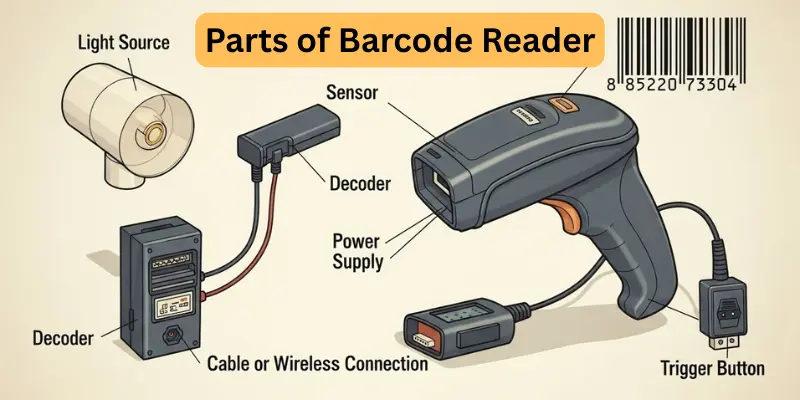
A barcode is made up of different parts that work together to be scanned and read. It is essential to know these parts because they are the main reason barcode scanning works fast and correctly. There are several basic parts, and then each part has its own job. Other parts may change depending on the barcode type. Here are 6 parts of barcode reader included.
1. Light Source
The light source is the part that shines light on the barcode. Small LED or laser lights are used here to make the barcode more straightforward. They are needed because, if the barcode is dark or unclear, scanning has problems. Then the light helps properly show the barcode lines.
2. Sensor
The sensor is the part that reads the reflected light from the barcode. Some sensors detect black-and-white lines. They are important where accuracy matters. When the sensor reads the light, the data moves forward for decoding.
3. Decoder
The decoder is the brain of the barcode reader. The barcode contains codes that are converted into readable information here. How the data has been decoded decides the meaning. Then the information is ready to show on the screen.
4. Cable or Wireless Connection
The connection is used to send data to a computer or system. There are wired and wireless options. They are chosen if speed and movement matter. Then the scanned data has gone to the connected device. Other systems may use Bluetooth or USB.
5. Power Supply
The power supply is what keeps the barcode working. There are batteries or direct power sources. They are needed when long-term use has occurred. Then the device shall continue scanning without stopping.
6. Trigger Button
The trigger button is the part pressed by the user. There are manual and automatic triggers. Who uses the barcode gives commands by pressing it. Then the scanning has started. Other models scan automatically without a button.
How a Barcode Reader Works
A barcode reader is a smart device that reads barcodes and shows information quickly. It is easy to use, but it has several steps. There are parts inside the reader, and they are all important for scanning. Then each step helps give correct information. Other tools cannot read barcodes as fast or as accurately as a barcode.
1. Shining Light on the Barcode
The first step is shining a light on the barcode. There are LED or laser lights here. They are needed so that the black and white lines of the barcode shall be clear. When the light hits the barcode, the reflection is ready to be read by the sensor. Other objects around have no effect because the reader focuses only on the barcode.
2. Reading the Reflected Light
The sensor it is the part that detects the reflected light. Some sensors read the darkness and brightness of lines. They are precise where accuracy is essential. If the barcode is damaged or dirty, the sensor has difficulty reading it. The scanner user gives commands by pressing the trigger, and the sensor shall start reading.
3. Decoding the Data
After the sensor reads the barcode, the decoder is the next step. There are special programs inside the decoder. They are used to change the scanned lines into numbers or letters. Then the data has gone to the computer or device for use. Other systems cannot automatically convert barcode lines into readable information like this.
4. Sending Data to the Device
The connection is the part that sends scanned data to a computer or system. There are wired and wireless connections here. They are used depending on where the device is placed. Then the information shall appear on the screen. Who checks the data can confirm it is correct if needed.
5. Showing the Information
Finally, the scanned data is shown on the computer or display screen. There are numbers, names, or prices that are easy to read. Then the user has all the information without typing anything. Other manual methods take more time and may give errors.
Uses of Barcode Readers
A barcode reader is a useful device that helps in many places. It is designed to make work faster and more accurately. Barcode readers have different uses and are helpful when fast, accurate information is needed. Then we can see how this tool has become important in daily life. Other uses depend on the type of business or system.
1. Retail Stores
In retail stores, barcodes are used to scan products at the billing counter. There are many products on the shelves, and they are easy to track when a barcode reader is used. Then the cashier has correct pricing and stock details. Other stores may use barcodes as inventory tools.
2. Warehouses
In warehouses, barcode readers are helpful for managing goods. There are boxes and items stored in large areas, and they are tracked easily with a barcode scanner. Then workers shall find items faster. Other uses include checking stock levels and shipment tracking.
3. Hospitals
In hospitals, barcodes are used where patient safety matters. They are used to read patient ID bracelets and medicine labels. Then nurses or doctors have the correct information about medicine or tests. Other medical tools shall be checked with barcode readers to avoid mistakes.
4. Libraries
In libraries, barcodes are helpful for keeping books organized. There are many books, and they are easily tracked when scanned with a barcode reader. Then librarians have a record of who borrowed which book. Other records, like due dates and returns, have gone digital.
5. Schools and Offices
In schools and offices, a barcode is used as an ID scanning tool. They are useful where attendance and access control have to be accurate. Then the system shall record the entry automatically. Other uses include tracking equipment or library items.
6. Courier and Delivery Services
Barcode readers are used where packages need tracking. There are labels with barcodes, and they are scanned when a package is sent or received. Then the delivery status has gone into the system. Other services, like inventory and route planning, shall also use barcode readers.
Barcode Reader vs Barcode Scanner
When we talk about barcode readers and barcode scanners, many people get confused because they look similar. But it is important to know the difference because each device has a special use. There are small handheld readers, and they are used in shops and offices. Then, there are scanners built into counters or mobile devices. Other differences include how they connect, how they read barcodes, and where they are used. Here, we shall explain the main differences in a simple way so that anyone who wants to use these devices can understand.
| Feature | Barcode Reader | Barcode Scanner |
|---|---|---|
| Definition | It is a device that reads barcodes and converts them into readable data. | A scanner is a device that scans barcodes but may need a separate decoder to read data. |
| Usage | They are used in stores, warehouses, and libraries to get product details quickly. | They are often found in counters, offices, and mobile devices for scanning items. |
| Connection | There are wired and wireless types as per user needs. | Some scanners are built-in or connected to computers and cash registers. |
| Portability | Handheld readers can be carried anywhere as needed. | Other scanners may stay in one place and are not portable. |
| Data Processing | It is ready to process data and send it to computers immediately. | They need extra software sometimes to read the barcode properly. |
| Example | A small device used by a shopkeeper to scan items at billing. | The scanner on a supermarket counter that beeps when items are scanned. |
Advantages and Disadvantages of Barcode Reader
A barcode is a useful device that helps read barcodes quickly and accurately. It is widely used in shops, warehouses, hospitals, and other places where fast data reading is important. They are simple to use and save time, but like all devices, there are some disadvantages too. Here we shall look at the main advantages and disadvantages of barcode readers.
| Advantages of Barcode Reader |
|---|
|
| Disadvantages of Barcode Reader |
|---|
|
Conclusion
A barcode reader is a simple but powerful device that has gone from being rare to common in daily life. They are used in stores, hospitals, warehouses, and other places where quick scanning is needed. It is easy to use, saves time, and reduces errors. Those who have never used it shall find it helpful once they try. If you want to manage products or information efficiently, then a barcode reader is the right choice. Here, the main structure of their use shows why they are important today.
FAQs About Barcode Reader
Here are some common questions about barcode readers that beginners ask. It is important to know these to understand how they work and where they are used.
It is a device that scans barcodes and gives information about products. They are used in stores, warehouses, and hospitals where quick data is needed.
Yes, there are barcode readers that can scan QR codes as well as traditional barcodes. If you have a QR code, it is read the same way as a barcode.
They are often used as the same thing, but there are small differences. The main structure of the device can vary when it comes to wireless or fixed scanners.
No, they do not need the internet to scan barcodes. Then, if you want to save or share the information, you may need a system or software that has internet.
They are used in supermarkets, libraries, hospitals, and warehouses. Other places, like schools or offices, may also use them for IDs or inventory tracking.
It is simple. The reader scans the barcode, then sends the information to a computer or system. Those who are new to barcode readers shall find it very easy to understand.
Anyone who needs to scan products or manage items can use it. Here, even beginners can operate it without special training.
It is true that barcode readers have some limits. They shall not scan damaged or dirty barcodes, and those that are far away may not be read correctly.
You shall give attention to the type, usage, and budget. If you have a warehouse, then a fixed scanner is better. Those for personal use can be handheld or wireless.