What is The Difference Between Computer Science and IT
Published: 3 Jan 2026
Computer science and information technology are two major tech fields. Both work with computers and digital systems. Many people think they are the same. They are not the same. Each field has a different role, focus, and career path. This explains what is the difference between computer science and IT in a clear way.
What is Computer Science?
Computer science is about how computers think and work. It focuses on creating software and solving problems using logic. People in computer science write code and build programs. It is about ideas behind computers. It explains how data moves and how systems work. Computer science studies algorithms, programming languages, and software systems.
There are tasks like:
- Writing computer programs
- Creating software applications
- Solving logical problems
- Working on artificial intelligence
Computer science focuses on building new technology.
What is Information Technology?
Information technology, also called IT, is about using computers in daily work. It helps people and businesses run systems smoothly. IT supports hardware, software, and networks. IT professionals manage systems that already exist. They fix problems and keep systems safe.
There are tasks like:
- Managing computer networks
- Fixing system errors
- Handling data and servers
- Providing technical support
Information technology focuses on using and managing technology.
Education Different between Computer Science and IT
Education in computer science and information technology is not the same. Both teach about computers, but the learning style and subjects are different. One focuses more on theory. The other focuses more on practice.
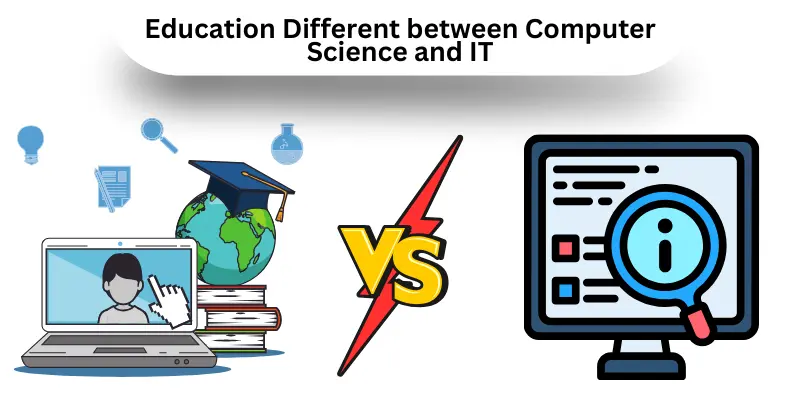
| Point | Computer Science Education | Information Technology Education |
|---|---|---|
| Main Focus | It focuses on how computers work from inside | It focuses on how computers are used in real life |
| Study Type | It is more theoretical and logic-based | It is more practical and hands-on |
| Programming | There is heavy use of programming languages | There is limited coding, mostly basic scripting |
| Math Requirement | There is more math and logical thinking | There is basic math, mostly for systems |
| Core Subjects | Algorithms, data structures, software design | Networking, system administration, security |
| Learning Style | Students learn to design and build systems | Students learn to manage and support systems |
| Project Work | Projects involve building apps or software | Projects involve setting up or fixing systems |
| Problem Approach | It solves problems using logic and code | It solves problems using tools and systems |
| Theory vs Practice | Theory plays a big role | Practice plays a big role |
| System Level | It works at software and system design level | It works at user and network level |
Key Education Difference at a Glance
- Computer science teaches how systems are built.
- IT teaches how systems are used and maintained.
- Computer science is more theory-based.
- IT is more practical and task-based.
Career Paths Different between IT and Computer Science Degree Graduates
Career paths in IT and computer science are different. Both work with technology, but the job roles are not the same. One focuses on creating systems. The other focuses on managing systems.
| Point of Difference | Computer Science Degree Graduates | IT Degree Graduates |
|---|---|---|
| Main Role | They design and build software systems. | They manage and support technology systems. |
| Work Focus | It is about coding and problem solving. | It is about system setup and maintenance. |
| Daily Tasks | They write code and test programs. | They monitor systems and fix issues. |
| Common Job Roles | Software developer, web developer, data analyst. | Network administrator, IT support specialist, system administrator. |
| Use of Programming | Programming is a core part of the job. | Programming is limited or basic. |
| System Responsibility | They create new applications and tools. | They ensure systems work without errors. |
| Work Environment | They often work on development projects. | They often work in offices or IT departments. |
| Career Growth | Growth comes through advanced development skills. | Growth comes through experience and certifications. |
| Problem Type | They solve logic and design problems. | They solve technical and user issues. |
Key Career Difference
- Computer science graduates build technology solutions.
- IT graduates manage and support technology systems.
These career differences help students choose a path that matches their skills and interest.
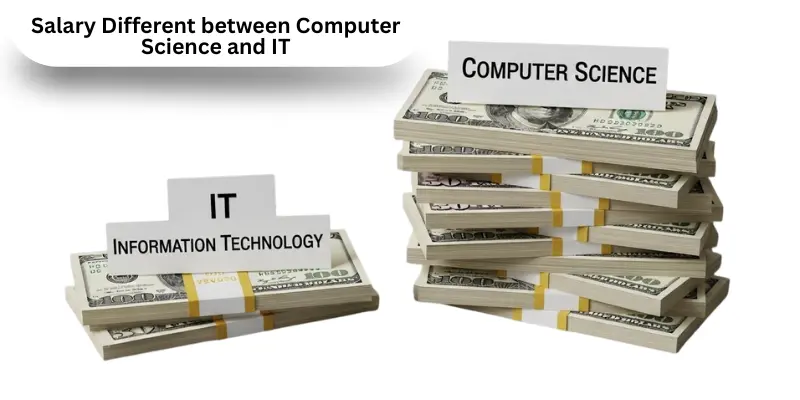
Salary Different between Computer Science and IT
Salary is an important factor when choosing a career in technology. Computer science and IT jobs offer different pay ranges depending on skills, role, and experience. Generally, computer science roles start with higher pay because they focus on creating technology. IT roles may start lower but grow with experience and expertise.
| Aspect | Computer Science | Information Technology (IT) |
|---|---|---|
| Starting Salary | Usually higher due to software development and coding roles | Often moderate, entry-level IT support and network roles |
| Average Salary | $70,000 – $100,000 per year (varies by location and specialization) | $50,000 – $80,000 per year (depends on experience and company) |
| High-Level Roles | Software Engineer, Data Scientist, AI Engineer – can earn $120,000+ | IT Manager, Cybersecurity Specialist, Network Architect – can earn $110,000+ |
| Growth Potential | High, especially in AI, software, and data fields | Moderate to high, with experience in network and system management |
| Factors Affecting Salary | Programming skill, innovation, tech expertise | Troubleshooting skill, certifications, IT infrastructure knowledge |
| Job Demand Impact | High demand in tech companies, startups, AI & data industries | Steady demand in business, healthcare, education, government IT systems |
Key Salary Difference
- Computer science pays more at early career stages.
- IT salaries grow steadily with experience and certifications.
- Advanced computer science roles often earn higher than most IT roles.
- IT roles are stable with strong long-term demand in companies.
Skills Different between Computer Science and IT
Computer science and IT require different skills. Both work with computers, but they use them in different ways. Computer science focuses on building software and solving problems. IT focuses on managing systems and helping people use technology. The table below shows the main differences clearly.
| Skill Area | Computer Science (CS) | Information Technology (IT) |
|---|---|---|
| Programming & Coding | Writes code in languages like Python, Java, and C++. Creates software and apps. | Uses basic scripting sometimes, but coding is not the main task. |
| Problem Solving | Focuses on solving algorithm and logic problems. Thinks about system design. | Focuses on fixing practical tech problems like network or system issues. |
| Software Development | Designs, develops, and tests new software programs. | Mainly uses existing software for work and management purposes. |
| System & Network Knowledge | Learns system architecture and theory, but not focused on day-to-day network management. | Manages networks, servers, and system setups in real-world environments. |
| Database Skills | Understands data structures, data modeling, and database algorithms. | Uses databases for storing, retrieving, and managing information efficiently. |
| Cybersecurity | Learns theory of security, encryption, and secure coding. | Applies security practices to protect networks, servers, and systems. |
| Mathematics | Strong focus on math and logic for programming and algorithms. | Uses basic math mainly for system monitoring or data management. |
| Tools & Software | Uses development tools, IDEs, and version control software. | Uses IT management tools like network monitors, helpdesk software, and system utilities. |
| Innovation vs Application | Focuses on creating new technology and solving unique problems. | Focuses on applying technology effectively in daily tasks. |
Future Trends Different in Computer Science and IT
Technology is changing fast. Computer science and IT both have exciting futures. But their trends are different. Computer science focuses on creating new solutions. IT focuses on managing and using those solutions effectively.
| Aspect | Computer Science Future Trends | Information Technology (IT) Future Trends |
|---|---|---|
| Focus Area | Building new technologies and software | Managing, securing, and supporting systems |
| Artificial Intelligence (AI) | Designing AI applications, machine learning models, and intelligent systems | Implementing AI tools in businesses for automation and efficiency |
| Data and Analytics | Developing algorithms to analyze big data | Using analytics tools to monitor systems, optimize networks, and support decisions |
| Automation | Creating automated software, robotic processes, and smart solutions | Maintaining and integrating automation tools in IT operations |
| Cybersecurity | Researching secure programming methods and AI-based threat detection | Protecting networks, systems, and user data from cyber threats |
| Cloud Computing | Building cloud-based applications and services | Managing cloud infrastructure and ensuring smooth access |
| Emerging Technologies | Quantum computing, augmented reality (AR), virtual reality (VR) | IT infrastructure upgrades, cloud migration, and system reliability improvements |
| Career Implications | Roles like AI engineer, data scientist, software developer | Roles like IT consultant, network administrator, cybersecurity analyst |
How to Choose the Right Option for You: Computer Science or IT
Choosing between computer science and IT can be confusing. Both deal with technology. Both have good jobs. But one may suit your interest and skills better. This guide helps you decide which path is right for you.
| Factor | Computer Science (CS) | Information Technology (IT) | How to Decide |
|---|---|---|---|
| Focus | Creating software, coding, programming, problem-solving | Managing networks, maintaining systems, troubleshooting | If you love building and designing, choose CS. If you enjoy helping systems work and solving tech problems, choose IT. |
| Skills Needed | Logical thinking, programming, mathematics, algorithms | Networking, system setup, cybersecurity, technical support | If you enjoy math and logic, CS fits. If you prefer practical work and tools, IT fits. |
| Education | More theory-based, involves coding and software design | More hands-on, involves systems, servers, and security | Check your interest: theory or practical work? |
| Career Paths | Software developer, data scientist, AI engineer | Network administrator, system support, IT consultant | Think about daily work you would enjoy. Building vs supporting. |
| Salary Potential | High starting salary in tech development roles | Growth over time in management and support roles | Consider your goals: high starting pay or steady growth? |
| Future Trends | Artificial intelligence, machine learning, app development | Cloud computing, cybersecurity, IT infrastructure | Look at what future work excites you more. |
| Work Style | Mostly coding and designing | Mostly maintaining and troubleshooting | Do you like building things or fixing and managing them? |
Advantages and Disadvantages of Computer Science
Computer science is a field that focuses on creating software and solving problems using computers. It offers many opportunities, but it also has some challenges. Here are the main advantages and disadvantages in a simple write.
| Advantages of Computer Science |
|---|
|
| Disadvantages of Computer Science |
|---|
|
Advantages and Disadvantages of IT
Information Technology (IT) focuses on using and managing computer systems, networks, and data. It offers many opportunities for practical work, but it also has some challenges. Here are the main advantages and disadvantages in a simple point.
| Advantages of Information Technology |
|---|
|
| Disadvantages of Information Technology |
|---|
|
Conclusion
Computer Science and Information Technology are both important fields in technology. They work with computers, but their focus is different. Computer Science is about creating software, coding, and solving problems. IT is about using, managing, and supporting computer systems and networks.
Choosing between them depends on your interests and skills. If you like building and designing technology, Computer Science is a good choice. If you enjoy managing systems and helping technology work smoothly, IT is the right option. Both fields have good careers and opportunities for growth.
FAQs about What is The Difference Between Computer Science and IT
No. Computer Science (CS) and Information Technology (IT) are different fields. CS focuses on creating software, building programs, and solving logical problems using computers. IT focuses on managing computer systems, networks, and supporting technology for businesses and users. Both work with computers, but their goals and skills are different.
It depends on your interest. Computer Science requires learning coding, algorithms, and logical problem-solving, which may be challenging if you don’t like math. IT is more hands-on and practical, focusing on managing systems, networks, and supporting technology. If you enjoy working with computers directly and helping others use them, IT might feel easier.
Yes. IT professionals can learn programming, but coding is not their main task. Their work focuses on managing systems, installing software, troubleshooting networks, and securing data. Learning programming can give IT professionals an advantage and open more career options, but it is not a requirement for most IT jobs.
Both fields have strong job growth, but in different areas. CS has high demand in software development, AI, and data science. IT has strong demand in networking, cybersecurity, and system administration. Career growth in CS may be faster for software roles, while IT growth is steady with experience in managing networks and systems.
Generally, entry-level CS jobs pay higher than entry-level IT jobs because they involve software creation and development. IT jobs may start with moderate pay but can increase over time, especially in specialized fields like cybersecurity, cloud management, or network administration. Advanced IT roles can match or even exceed some CS salaries.
Computer Science requires more math, especially logic, algorithms, and problem-solving skills. IT requires some basic math, mainly for tasks like data management, networks, and troubleshooting systems. If you enjoy math, CS may suit you better. If you prefer practical tasks with less math, IT may be a better fit.
Yes. Switching is possible by learning new skills. For example, an IT professional can learn programming to move into CS roles. Similarly, a computer science graduate can learn system administration or networking to work in IT. Both fields share some technology knowledge, making transitions easier with training.
For beginners, the choice depends on personal interest. If you enjoy coding, solving logic problems, and building software, Computer Science is a great start. If you like practical work, supporting systems, and managing networks, IT is better. Both fields offer good career opportunities, so choose based on what you enjoy doing most.