What is a Computer – History – Parts – Types and Benefits
Published: 20 Jun 2025
A computer is a helpful machine that people use every day. It can do many jobs like writing, drawing, counting, and even playing music or games. Computers work fast and help students, teachers, and workers do their tasks more easily. Today, knowing how to use a computer is just as important as knowing how to read or write.
In this guide, we will explain what is a computer, the basic parts of computers and how computers work in proper detail.
What is a Computer
The Definition of a Computer: A computer is an electronic machine that follows instructions to complete tasks. It takes information, works on it, and delivers results in just seconds. People use computers to write, solve problems, watch videos, and learn new things. It is smart, fast, and helps make work easier.
History of Computers
A long time ago, people did not have computers. In the early days, there was no electronic computer. They used to do all the work by hand. People used simple tools for counting. The first computers were very big and slow. They were made more than 70 years ago. It is a long journey from wooden tools to modern smart computers.
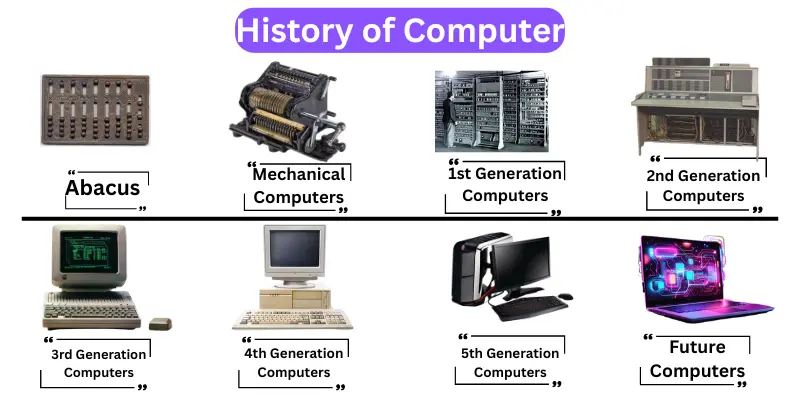
Computers have changed a lot over time. They grew step by step in different stages. Let’s learn about the main stages in the history of computers and the generations of computers.
The Abacus (Ancient Times)
The first step in the history of computers was the simple counting tools. Long ago, people used a tool called the abacus. It was used thousands of years ago. It helped them count and perform simple math more quickly. It is one of the first tools like a computer.
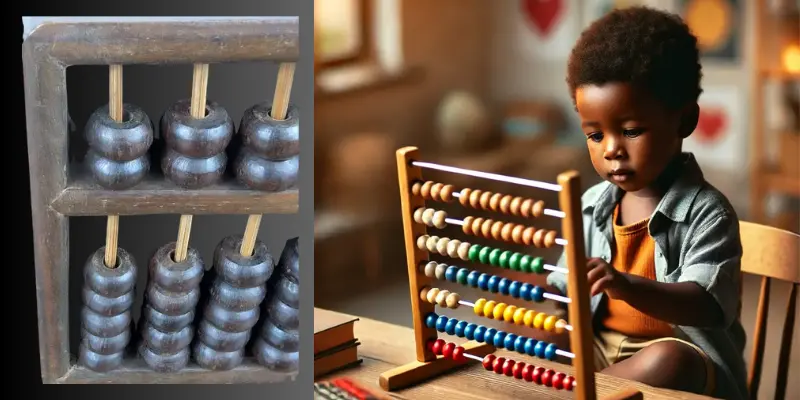
- It is made of a frame and moving beads.
- People moved the beads to solve math problems.
- There are rods that help count numbers quickly.
Mechanical Computers (1800s)
In the 1600s, Blaise Pascal invented the Pascaline to help his father solve math problems, and in the 1800s, Charles Babbage proposed the idea of a smart machine called the Analytical Engine, which could perform many types of calculations automatically.
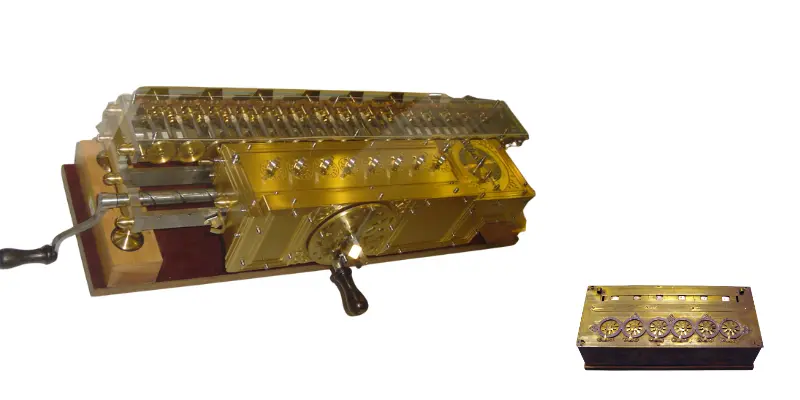
- It has metal wheels.
- The wheels move to add and subtract numbers.
- They are faster than manual counting.
The Idea of the First Modern Computer
In the 1800s, Charles Babbage created the idea of the first modern computer. People call him the Father of the Computer.
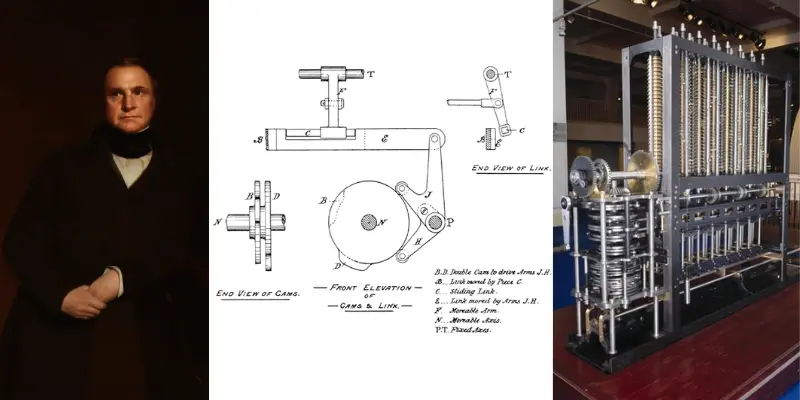
He designed the Difference Engine and the Analytical Engine.
- It is a machine designed to perform automatic calculations.
- There are parts for input, processing, and output.
- These parts have the same theme as modern computers.
Although the machine was not fully built at that time, the idea never went away. Modern computers still follow those concepts.
First Electronic Computers
The first electronic computers appeared in the 1940s. One famous example is ENIAC. These computers used vacuum tubes.
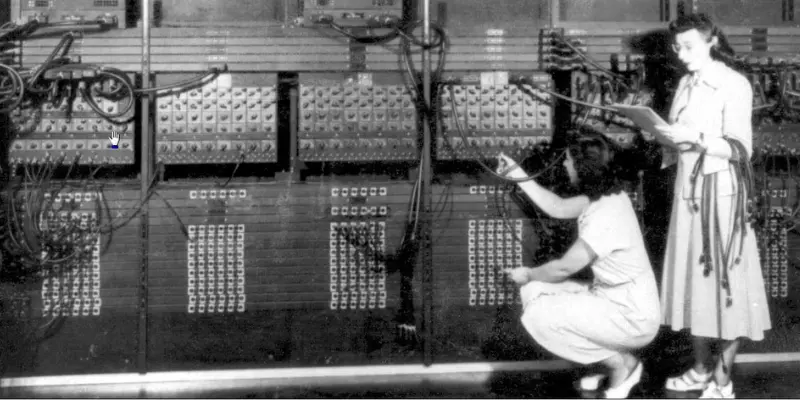
Alan Turing also helped develop ideas about computing machines.
- They are very large machines.
- There are thousands of vacuum tubes.
- The machines have high power use.
These computers showed how electronic speed can change computing. However, they were expensive and hard to maintain.
Generations of Computers
The history of computers is also divided into generations.
- First Generation: Vacuum tube computers
- Second Generation: Transistor computers
- Third Generation: Integrated circuits
- Fourth Generation: Microprocessors
- Fifth Generation: Artificial intelligence computers
Modern Computers
Modern computers became smaller and faster after the invention of microchips. Many companies helped improve computer technology, including IBM, Apple Inc., and Microsoft.
- It is easy to carry modern devices.
- There are laptops, tablets, and smartphones.
- They are used in schools, offices, and homes.
Modern computers can store large amounts of data. They give fast results and help people complete tasks quickly.
Importance of the Computer
Computers are very helpful in our daily life. They make work easier and faster for everyone.
Here are some Importance of Computers:
- It is a machine that helps people work faster and smarter.
- There are many tasks that computers complete in seconds.
- They are used in schools, offices, and homes.
- Computers give quick answers when students search for information.
- It has a large storage space where people keep files safely.
- Computers show how to create documents, pictures, and presentations.
- Then people share their work online with other users.
- Computers help people who study, teach, or manage data here and everywhere.
- If work were done by hand, it would have gone more slowly than computer work.
- Those modern devices have become the main theme of digital life for him, her, and other users.
Basic Parts of a Computer
A computer has many parts that work together like a team. Each part has a special job that helps the computer run properly. When all the parts work together, we can use the computer to do many things like typing, drawing, or watching videos.
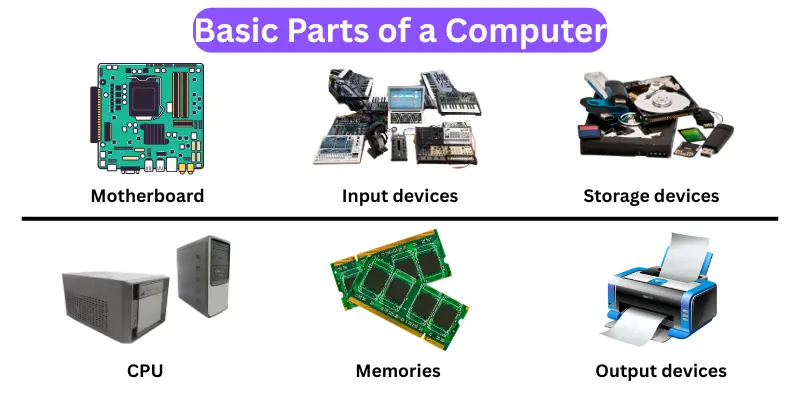
Here are the main 10 parts of computer:
- Motherboard
- Processor (CPU)
- RAM (Random Access Memory)
- Hard Disk / SSD
- Power Supply Unit (PSU)
- Graphics Card (GPU)
- Cooling Fan
- ROM (Read Only Memory)
- Input devices
- Output devices
Each of the basic parts of computer is important. When they all work together, the computer becomes a smart and helpful tool for everyone.
Main Types of Computers
Computers come in different shapes and sizes. Each type is made for special jobs. Some computers are big and stay on a desk. Others are small and easy to carry. Even the phones we use are like tiny computers.
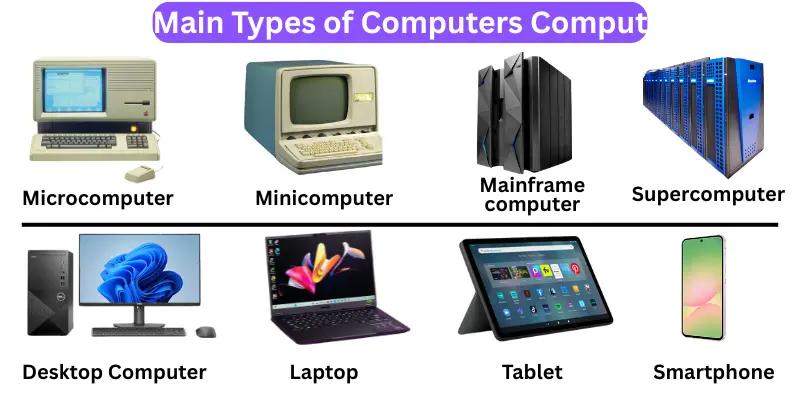
Here are the types of computers:
- Microcomputer:
- Minicomputer:
- Mainframe Computer:
- Supercomputer:
- Desktop Computer:
- Laptop:
- Tablet:
- Smartphone:
Uses of Computer
A computer is a smart machine that helps people in many ways. We use computers in schools, homes, offices, and even hospitals. They make our work easier and faster. Here are some 10 uses of computer include:
- In Schools: Computers help students learn lessons when teachers give fun activities.
- At Home: They are used to play games, watch videos, and do homework.
- In Offices: Workers use computers to write files and send emails, with data stored securely.
- In Shops: Shopkeepers use computers to make bills and check prices easily.
- In Hospitals: Doctors use computers to see reports and store patient records.
- In Banking, computers keep financial records safe and send money quickly.
- In Communication: Computers help people talk online with other people here and far away.
- For Learning: It is easy for students who read books and watch study videos.
- For Games: Kids play fun games that show how learning can be enjoyable.
- For Designing: People draw pictures and create other digital art.
How a Computer Works
A computer works like a smart helper. It gathers information from you, thinks it over, and then gives you the answer or result.
- Input: First, you give instructions to the computer by using the keyboard, mouse, or touchscreen.
- Processor: The computer’s brain, called the processor (CPU), reads these instructions and does the work. It can add numbers, show pictures, or open games.
- Output: After the computer finishes the work, it shows the result on the screen or prints it on paper.
- Memory: A computer also uses memory to save information while it works. It can remember things for a short time or save them for later.
Characteristics of Computer
Many users want to finish work faster. The Characteristics of a computer show how computers save time and effort. Here are 10 characteristics of computer:
- Speed: A computer operates extremely quickly. It can do big calculations and complete tasks in just a few seconds.
- Accuracy: Computers are very accurate. They give the correct answers if the right instructions are given.
- Automation: Once you give a command or program, the computer can do the work on its own without needing help.
- Storage: A computer can store a vast amount of information, including photos, videos, documents, and more. You can find and use them at any time.
- Multitasking: A computer can perform multiple tasks simultaneously, such as playing music while typing or browsing the internet.
- Diligence: Unlike humans, computers don’t get tired. They can work for hours without stopping or making mistakes.
- Communication: Computers enable people to send messages, emails, and engage in online conversations with others worldwide.
- Versatility: You can use a computer for many things studying, designing, watching movies, working, and more.
- No Feelings: Computers don’t have emotions. They don’t get angry, happy, or bored. They only do what you tell them.
- Logical Thinking: Computers follow logical steps and instructions. They cannot guess or assume, as humans do.
Features of Computer
There are many important features that make computers powerful and reliable. They are designed to work quickly and produce accurate results. Then users can save time and effort by using computers and easily complete many other tasks.
- Speed: It is very fast, completing tasks in seconds.
- Accuracy: It gives correct results when the data is correct.
- Storage: There are large spaces to store data and files.
- Automation: It works automatically after instructions are given.
- Multitasking: They can handle many tasks at once.
- Reliability: It is dependable and works for long hours.
- Versatility: It is useful in education, business, and other fields.
- Diligence: It does not get tired and works continuously.
- Communication: It helps people share information quickly.
- High Processing Power: It can process large amounts of data quickly.
Advantages and Disadvantages of Computer
The Advantages and Disadvantages of Computers show how it can make work easier and where it may cause problems. It is important to know both sides before using computers.
| 5 Advantages of Computer |
|---|
|
| 5 Disadvantages of Computer |
|---|
|
FAQs about What is a Computer
Here are some common questions and easy answers to help you better understand how to use them.
Use the keyboard to press letters and words. You can write stories, letters, or homework on it.
Open a game app or website, then use the keyboard or mouse to control the game.
Click on “Save” or press Ctrl + S on the keyboard to save your work.
Connect a printer, click “Print” on the computer, and your paper will come out from the printer.
Computers can be used for learning, playing games, watching videos, writing, and talking to friends.
Use the internet and type what you want to know in a search engine like Google.
Use antivirus software and do not open unknown files or links.
Click the “Start” button and then choose “Shut Down” or “Turn Off”.
Use Wi-Fi or an Ethernet cable, and enter the password if needed.
Conclusion
A computer is a smart and helpful machine. It takes instructions from us and gives fast and correct results. People use computers at school, at home, in offices, hospitals, and many other places. It helps us write, draw, learn, play games, and talk to others. Even kids can use computers to read books, watch videos, and do homework.